
2023 marks the beginning of AI era for enterprises. Microsoft left no opportunity to lead the AI race. The company brought Copilot, a powerful AI tool, to their productivity and CRM tools, web browser, and search engine. As a Microsoft partner, we are so excited about the pace at which the AI landscape is changing. Taking the AI innovation forward, Microsoft made some interesting announcements at the Ignite 2023. In this blog post, we will discuss the expansion of Copilot and how it can significantly impact your business operations and employee productivity.
Boosting employee productivity with Copilot for Microsoft 365
Early November this year, Microsoft made Copilot generally available for enterprises on Microsoft 365. Businesses like EY, Honda, Visa, and PwC were among the enterprises that adopted Copilot in their workplace. As per Work Trend Index data, Copilot helped employees become more creative and productive. At Ignite 2023, Microsoft unveiled more personalized experiences on Copilot, making it a complete collaborator at work.
Copilot will be generally available on Teams, Outlook, Loop, Word, PowerPoint, and Viva. Copilot’s capabilities will help you prepare for your meetings, create presentations, take meeting notes, draft messages, summarize email threads, and catch up on meetings. The AI tool will deliver results based on your role, responsibilities, and preferences. Also, it will inherit your company’s existing policies on security, privacy, identity, and compliance. So, when you log in with your Microsoft Entra ID, Copilot cannot access any information you don’t have access to.
Develop tailored copilots with Microsoft Copilot Studio
Microsoft has launched a low-code tool called Copilot Studio at Ignite 2023, enabling enterprises to create tailored copilots for external and internal business uses. Copilot Studio is integrated with Microsoft’s conversational AI technologies such as Azure OpenAI Studio, Cognitive Services, and Bot Service. The tool enables you to develop, deploy, analyze, and manage all your copilots from one integrated platform. Copilot Studio comes with more than 1100 pre-built connectors. So, you can connect your copilots with your enterprise data sources, such as SAP, with tight data access controls.
Empower frontline workforce with Copilot for Dynamics 365
At Ignite 2023, Microsoft introduced Copilot for Dynamics 365 Field Service for AI-powered experiences for frontline workers. Using Copilot, field service agents can quickly access required information on-field by asking questions in natural language within Teams. Microsoft will also roll out Copilot across Dynamics 365 products including Sales, Supply Chain Management, Finance, and Guides.
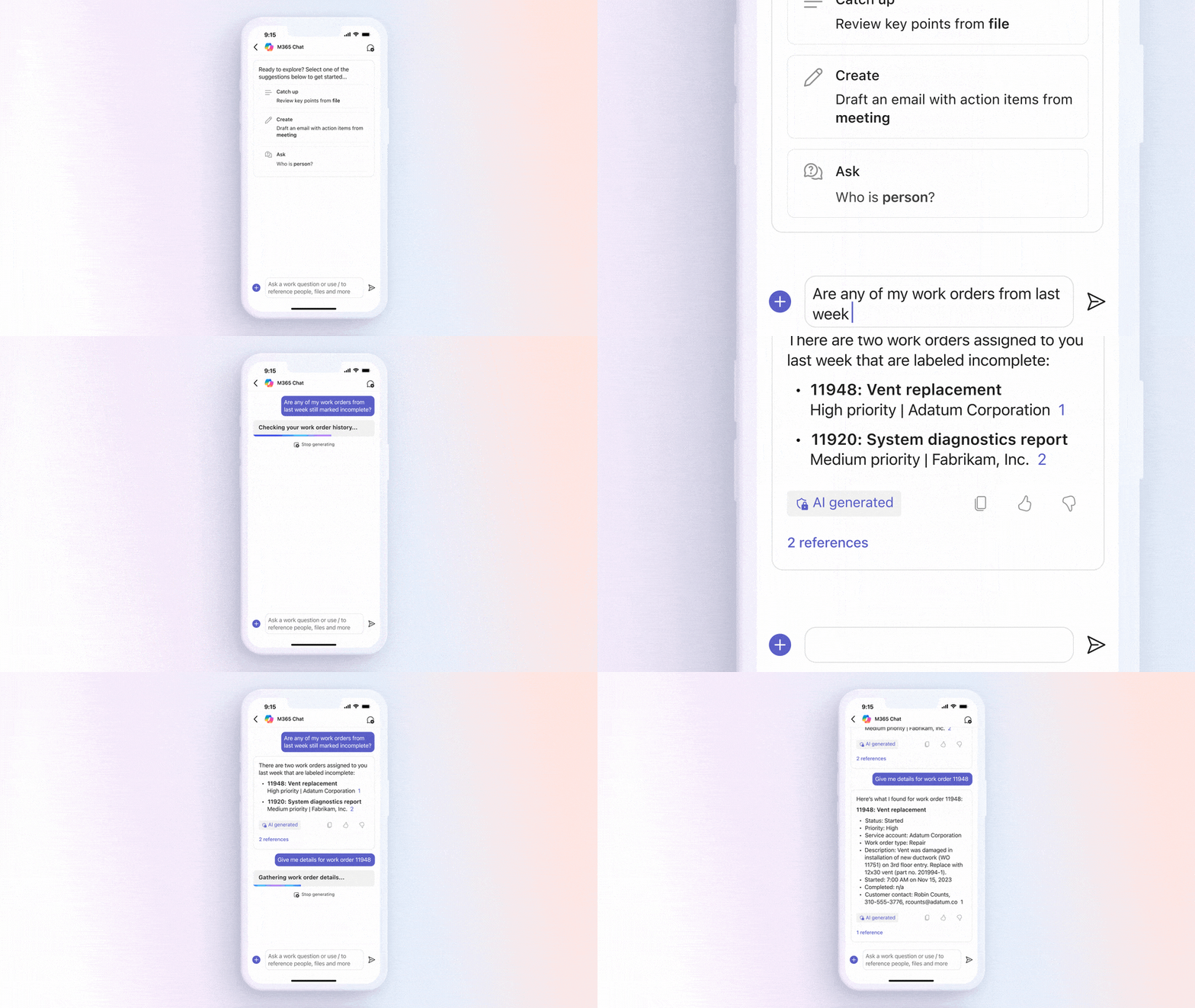
Ref: Microsoft Copilot for Service and new AI experiences – Microsoft Dynamics 365 Blog
Elevate customer experience with Copilot for Service
To boost the productivity of customer service agents and enhance customer experience, Microsoft has brought Copilot for Service. You can integrate Copilot with your organization’s data sources and productivity tools, such as Outlook and Teams. This will empower your customer service agents with quick access to information required to create personalized conversations and deliver faster resolutions.
Manage your Azure infrastructure better with Copilot
Helping businesses design, operate, optimize, and troubleshoot cloud infrastructure and services, Microsoft has brought Copilot for Azure. Cloud infrastructures are getting more complex with a rapidly increasing number of end users and applications. This is further complicating the work of IT teams, bringing down their productivity and efficiency. With Copilot onboard, IT teams can access information faster, generate deep insights, and get suggestions to improve the performance of Azure infrastructure and services. 88% of IT professionals using GitHub Copilot feel more productive, and Microsoft claims that Azure Copilot will work for IT professionals in the same way.
Unified data platform – Microsoft Fabric
Enterprises were quick to adopt the unified data platform, Microsoft Fabric. Currently, 60 percent of Fortune 500 companies are using Fabric. At Ignite 2023, Microsoft announced the general availability of the AI-powered data platform. The platform reshapes your data architecture and how you leverage the power of data. Fabric integrates with Team and Office, enhancing the value created by data across your organization.
As we reach the end of 2023, Microsoft has really made significant progress on the AI front. Some of the features announced at Ignite 2023 are already rolled out, whereas some will be released soon. I’d be more interested in diving deeper into each of these features and their potential for enterprises. We will discuss these features in detail in our upcoming blog posts to help you understand how you can leverage them. Watch this space!
PS: If you need help on how to identify potential use cases for Copilot and other generative AI technologies in your business, we’re always there for you. Get in touch with us.
Comments
Post a Comment